

Making hard decisions easier
Broad modes of decision-making
Recently we were talking about decision-making with a friend who had been a senior executive in a large NZ business for twenty years. Stuart* described his process of making important complex decisions as having two distinct modes – both essential.
MODE 1: Logical/rational – conceptual, data-rational, analytic, structured
MODE 2: Intuitive – experiential, creative, personal, reflective
His comment caught our attention because this distinction is usually expressed as a rigid dichotomy, not as an integrated pair of processes. Often, we think of these two modes as suited to distinctly different kinds of decision-making situations, such as business situations verses more personal decisions.
Big decisions related to work and careers frequently get stuck in a loop, a merry-go-round of yes–no–yes–no. You toss it this way and that for weeks. You’re an expert on the pros and cons, the pull factors and the push, the costs and financial implications. You have worked it through a Critical Thinking Framework with others and value all their inputs. And still … you don’t seem able to settle the matter.
Real-life example
We needed to decide which of two important professional development events we should attend. They featured different key-note speakers on similar topics, and both needed expensive overseas travel. For various reasons, we could not simply do both – and we had to do one of them – so the do-nothing option was ruled out. To make matters worse, there were personal allegiances involved in each option. We were stuck.
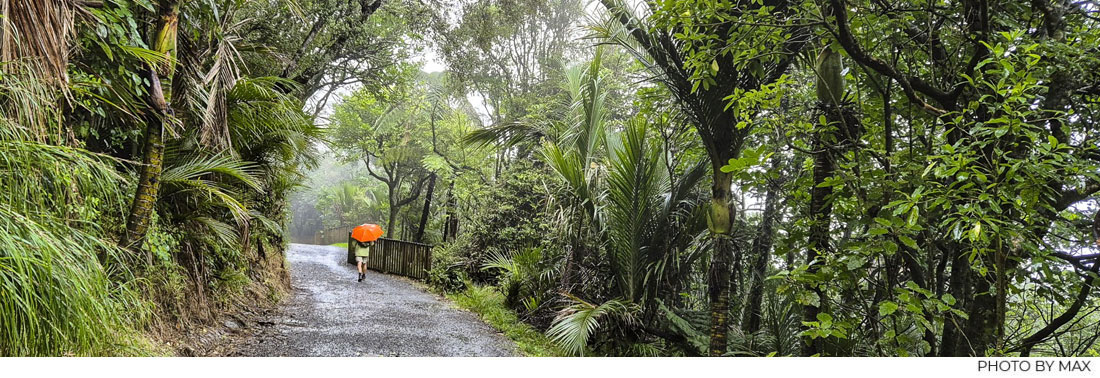
Feeling a bit flat about the whole situation, which required an urgent decision, we decided to walk to a local café. There are several routes to get there. The quickest is by road, but there’s a longer route through bush tracks. As you can guess, we took the long way.
Getting UNSTUCK
Appreciating the natural landscape and concentrating simply on where we were walking, we started to relax and take it all in – the plant life, beauty, quiet, colours, and sunlight. Absorbed in walking through this environment we stopped obsessively rationalising and weighing the options. As they shifted into the background, some space appeared where there was previously just a tangle of considerations – a sense of calm and rightness emerged – it’s hard to describe, but very real all the same.
In that space, the in-your-face decision-making demand didn’t go away, but it became slightly remote, and we gained a sense about which choice to make. What had happened? We had slipped into that Second Mode of Decision-Making.
Final check
“Yes to all that!” Stuart said, when we told him about this experience. Then he emphasised a crucial last step: “It’s really important to finally go back to your original considerations – the stuff of MODE 1 – and check that your decision is at least not inconsistent with something important from that earlier process. Then you really have nailed it! I find I can trust that sense of calm or rightness more and more – it gets easier with practise.”
Summary
- There are two broad modes of decision-making, and both are essential to getting decisions that leave you confident and comfortable.
- Walking or jogging in a natural environment can give a significant boost to accessing MODE 2 – the more intuitive/creative component of quality decision-making.
- It’s vital to cross-check that your decision is not undermining a critical consideration you had when thinking in MODE 1.
Cheers to making better decisions – Contact us
Frances and Max